Not if the translation is good and adds value for readers. Google does not penalize a site simply for using AI, but its spam policies do target scaled content abuse, which includes pages made “through automated transformations like synonymizing, translating, or other obfuscation techniques” without adding value. Translating your own helpful content into another language for real visitors is a different thing. What actually causes problems are poor technical setup, missing hreflang annotations, or unreadable translations.
If you ask ten website owners why they have not yet translated their website into German, Spanish, or French, at least half will give you the exact same answer: “I want to, but I am terrified that Google will slap my site with an algorithmic penalty.”
That hesitation is completely understandable. For nearly two decades, Google’s public guidelines warned webmasters against “automatically generated content.” SEO forums were filled with cautionary tales of affiliate sites that used cheap automated scrapers and lost all their organic rankings overnight. Many site owners still believe that any text generated by an algorithm is treated as search spam.
In 2026, the reality of search has completely changed. Google’s official stance on artificial intelligence has evolved, neural language models have replaced crude dictionary replacements, and international SEO still comes down to helpful content and a clean technical setup. In this guide, we will unpack what Google actually says about AI-translated content, why technical structure matters far more than translation tools, and how to protect your search equity when expanding into new languages.
What Google Search Central Guidance Actually States
To understand Google’s position, we need to look at what Google Search Central officially publishes rather than relying on hearsay from SEO forums. Two current Google pages matter here: its spam policies and its guidance on managing multi-regional and multilingual sites.
Google’s policy makes an essential distinction between content purpose and content creation:
- Rewarding quality over production method: Google’s core ranking systems are designed to reward original, helpful, and high-quality content that demonstrates expertise, experience, authoritativeness, and trustworthiness (E-E-A-T), regardless of how that content was produced.
- Penalizing manipulation, not automation: Using automation (including generative AI and machine translation) with the primary purpose of manipulating ranking in search results is a violation of Google’s spam policies. The scaled content abuse policy names pages produced through automated translating without adding value.
- Serving the human visitor: Using AI to deliver genuinely useful content in an international visitor’s native language is a helpful service. The test is whether the page adds value for the reader, not which tool wrote it.
In practice, the question is whether a visitor gets a clear, accurate, useful page in their language. Google also notes that localized versions are only treated as duplicates when the main content stays untranslated. (For a broader overview of how multilingual WordPress architecture works, see our 2026 multilingual guide).
Old Machine Translation vs Modern Large Language Models
If Google does not penalize AI translation, where did the persistent fear of penalties come from in the first place? The fear comes from memories of how terrible automated translation used to be a decade ago.
Between 2010 and 2018, machine translation relied on statistical engines and word-by-word dictionary lookups. If you translated an English phrase like “break a leg” or “run a tight ship” into German or Italian, older tools produced laughable literal translations that made no sense to native speakers. When visitors landed on those old automated pages, many gave up quickly.
Google has not confirmed bounce rate or dwell time as ranking signals, but unreadable text hurts in other ways: it earns no links, no shares and no customers, and it can fall under the spam policies above. The problem was never the tool that wrote the words; it was the terrible reading experience those words created.
Modern Large Language Models (LLMs) function completely differently. Instead of swapping individual words, modern AI evaluates full paragraphs, understands cultural idioms, preserves tone of voice, and produces grammatically sound copy that reads naturally to native speakers. When international visitors find clear, fluent answers, they stay on your page, engage with your content, and convert into customers.
The 5 Technical SEO Signals You Must Get Right
While language quality determines whether visitors stay, technical architecture determines whether Google can find and index your translated pages in the first place. When website owners complain that their translated pages are not ranking, the cause is far more often a technical configuration error than an AI penalty.
Here are the five technical SEO signals you must implement correctly:
| Technical Requirement | Why It Matters to Google | Recommended Best Practice |
|---|---|---|
| Dedicated Crawlable URLs | Google recommends “different URLs for each language version”, and bots cannot index translations that only exist in cookies or session memory. | Use clean language folders (like /de/ or /es/) with dedicated permalinks for every language. |
| Valid hreflang Tags | Tells search engines which language version to show to which searchers. Both pages must point to each other, or Google ignores the tags. | Cross-reference all alternate language versions in <head>, including an x-default tag. |
| Self-Referencing Canonicals | Prevents search engines from treating translated pages as duplicate copies of your primary language. | Every localized page must have a canonical URL pointing directly to itself, not to the English original. |
| Localized Metadata | Search snippets and click-through rates depend on native titles and meta descriptions. | Translate SEO titles, meta descriptions, image alt tags, and OpenGraph social tags. |
| Clean Server-Rendered HTML | Content that only appears after client-side JavaScript runs is harder for crawlers to process than plain HTML. | Serve translated content directly in server-side HTML from your WordPress database. |
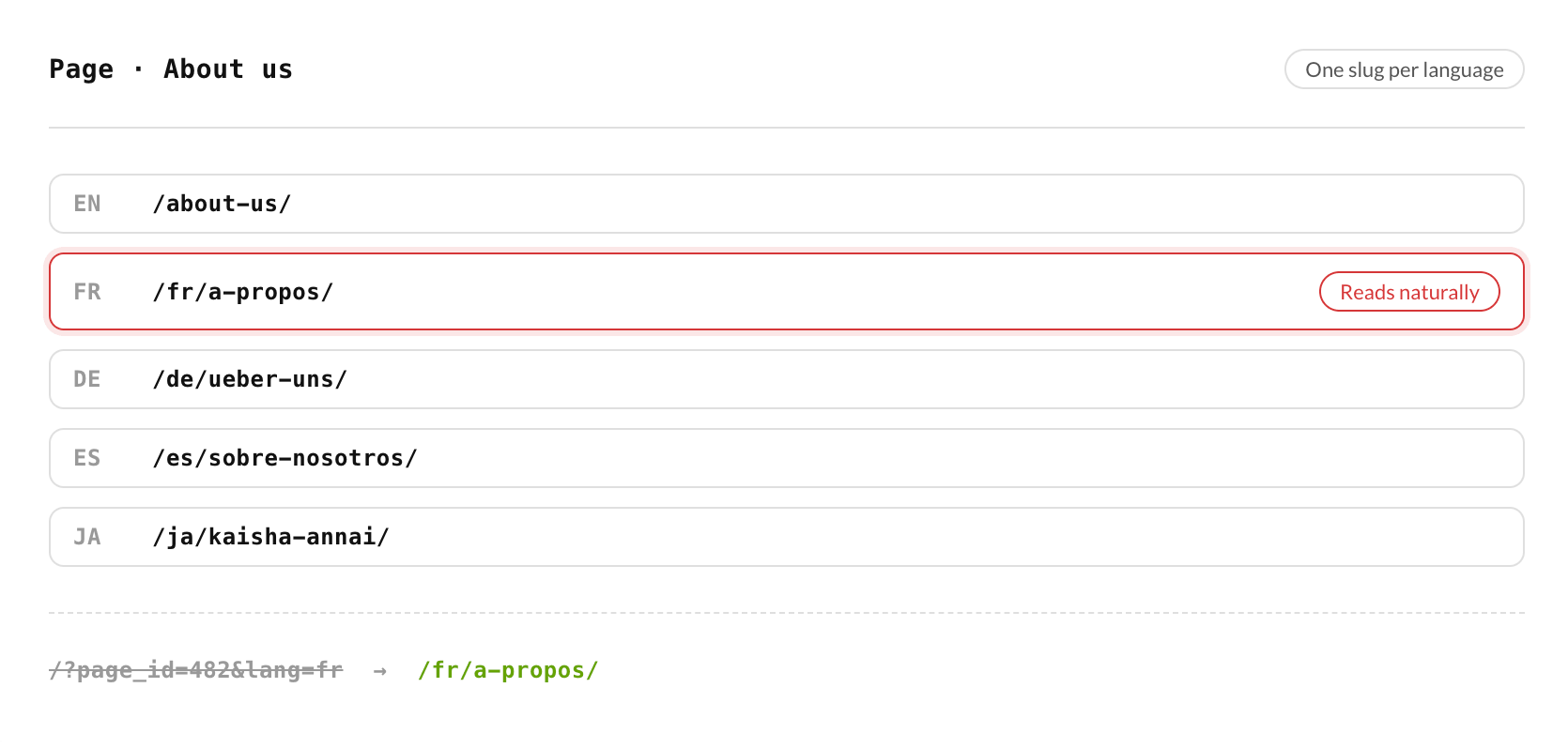
This is why tools that use client-side JavaScript overlays often struggle to rank in international search results. Plain, server-delivered HTML is the safest setup for crawlers. Omnalingo translates upfront and serves the result from your own server, so search crawlers see every localized sentence in the page itself. (See our comparison on Omnalingo vs WPML to understand how different plugins handle database records).
The Human-in-the-Loop Advantage: When to Review Copy
Even though modern AI models produce strong translations, taking a fully hands-off approach across your entire website is rarely the smartest business strategy. The most successful international websites use a targeted “human-in-the-loop” workflow.
You do not need human linguists to review every single paragraph of every archive page or blog post. Instead, allocate human review where commercial risk and legal precision matter most:
- Tier 1: High-Priority Pages (Human Review Recommended): Your homepage, primary service landing pages, pricing tables, checkout notices, and legal compliance pages (privacy policy, terms of service). A quick ten-minute review by a native speaker ensures your brand voice and legal terms are razor sharp.
- Tier 2: Medium-Priority Pages (Spot-Check Review): Top-performing blog posts, case studies, and primary category descriptions. Review the main headlines, callout buttons, and introductory summaries.
- Tier 3: Automated AI Delivery (Light Review): Long-tail blog archives, FAQ entries, product specification tables, and standard documentation. Modern AI handles this factual, straightforward copy well; check a few samples and add product or brand terms to your glossary.
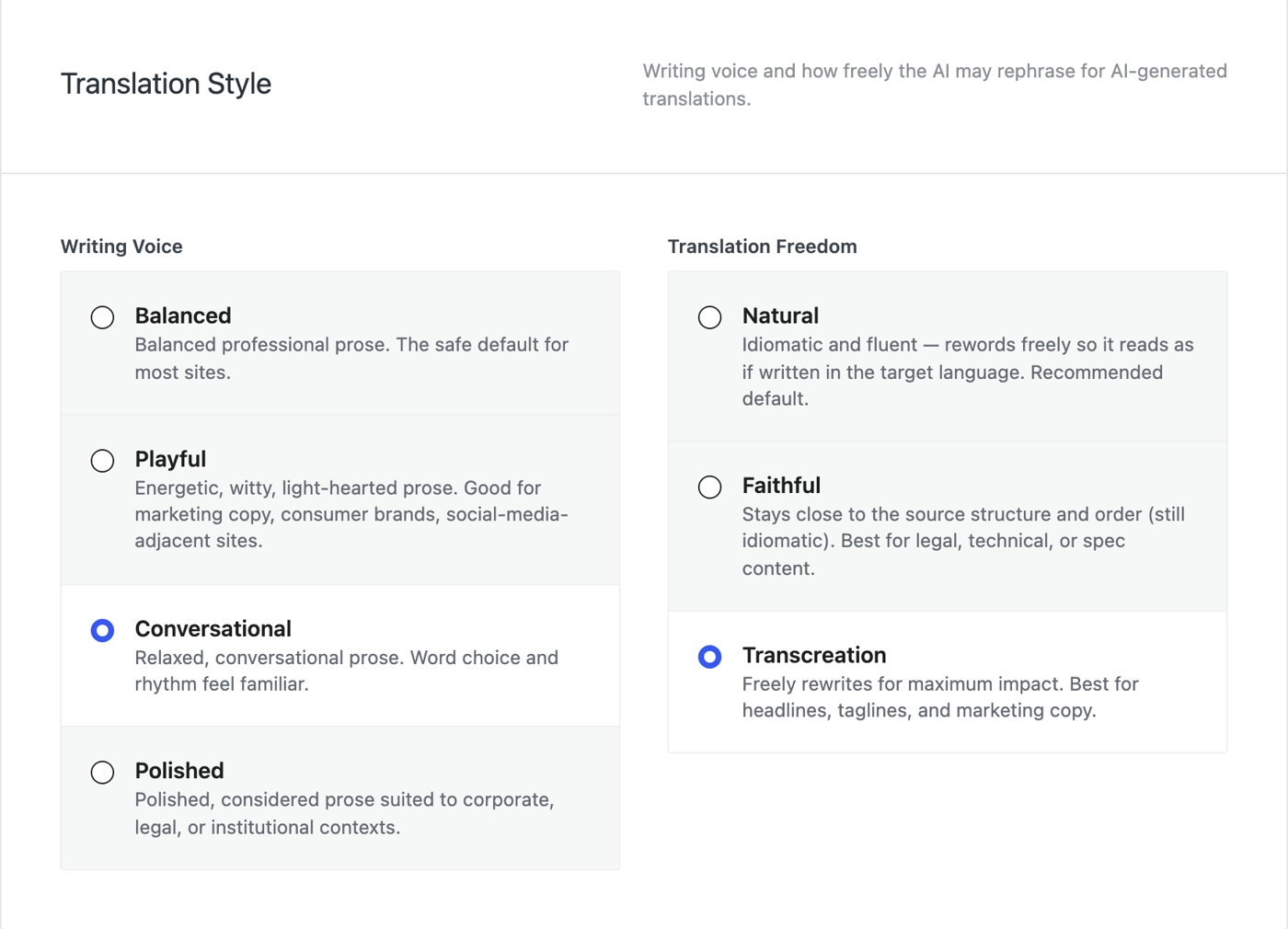
By focusing human attention on your top conversion pages while letting AI handle the long tail of your content, you reach more markets at a fraction of traditional agency costs. (Check out our breakdown on what multilingual WordPress actually costs for real numbers.)
Frequently Asked Questions About Multilingual SEO Rankings
Should I create separate Google Search Console properties?
A single Domain property already covers all your languages. A domain property (like example.com) automatically captures traffic across all subdirectories (such as example.com/de/ and example.com/es/), and you can filter reports by page URL containing /de/. If you want completely separate reports per language, you can additionally add a URL-prefix property for each language folder. Our guide on measuring a multilingual site in Search Console walks through both options.
Does Google index AI-translated pages immediately?
Indexing often takes days to weeks, and ranking takes longer. Search crawlers need time to discover your new URLs and follow your internal links. You can help the process by submitting Omnalingo’s XML sitemap (omnalingo-sitemap-index.xml, which lists every language version with hreflang alternates) in Google Search Console and by making sure your language switcher links to each language.
Can poor translations trigger a sitewide quality penalty?
A few weak pages are unlikely to drag down the rest, but a large volume of low-value pages can. An unreadable translated page will struggle to rank on its own. Mass-produced pages that add no value are what Google’s spam policies target, and that can affect a site more widely. Keeping translations accurate, reviewing your important pages and using a glossary for brand terms keeps your localized pages on the right side of that line.
Ready to expand your organic search reach into international markets? Try Omnalingo today and see how easy it is to launch fast, SEO-friendly multilingual WordPress sites with your translations stored in your own database. Have questions about setting up your international search strategy? Get in touch with our team via our contact form.